If You Risk Nothing, then You Risk Every Graphics for Crafts
As a brand designer who has spent years refining visual identities for local shops and handmade sellers, I recently evaluated a specific design asset titled If You Risk Nothing, then You Risk Every. My goal was to determine if this piece could serve as a foundational element for a real-world branding project. After testing it across various mockups, from product labels to social media banners, I found that this graphic holds significant potential for small business owners looking to elevate their presentation.
The First Impression of Bold Brand Messaging
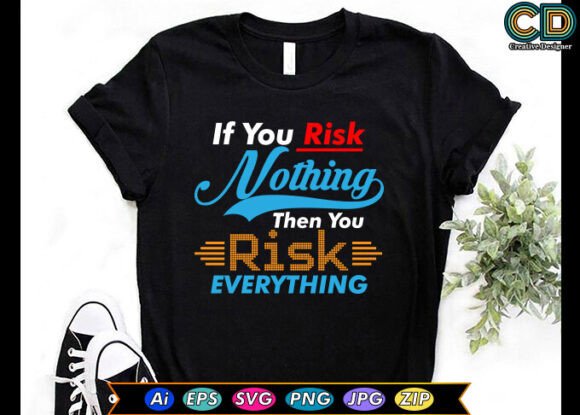
When you first encounter the text-based design If You Risk Nothing, then You Risk Every, the immediate feeling is one of empowerment and urgency. It does not whisper; it speaks with conviction. This mood suggests a brand personality that is confident, resilient, and perhaps slightly rebellious. For a local business owner, whether running a boutique clothing store or a craft bakery, this asset implies a willingness to take chances and a commitment to quality over safety.
The typography feels modern yet grounded, making it versatile enough for a handmade soap business that wants to appear professional without losing its artisanal soul. It works particularly well for brands that want to convey strength, such as a coffee roaster emphasizing bold flavors or a fitness gear shop encouraging customers to push their limits. The design creates an emotional hook that can transform a simple product into a statement piece.
Real-World Application for Local Brands
In my recent review, I imagined applying this graphic to a seasonal campaign for a local candle maker. The phrase fits perfectly on a hang tag attached to a limited-edition winter collection. It serves as more than just decoration; it acts as a brand story element that resonates with customers who value authenticity. Beyond hang tags, this asset proves highly effective for product labels where space is at a premium but impact is required.
The versatility extends to promotional materials as well. I tested the concept on a flyer for a pop-up market stall. Placed prominently as a hero graphic, If You Risk Nothing, then You Risk Every draws the eye immediately, setting a tone of excitement before the customer even reads the event details. It also translates beautifully to digital spaces, serving as a powerful background for website banners or Instagram stories. When used in marketing visuals, it helps establish a clear visual hierarchy, ensuring the message stands out against competing content.
For packaging design, this graphic can act as a decorative brand element that adds depth to plain boxes or bags. Instead of relying solely on logos, which can sometimes feel static, this text-based design injects energy into the unboxing experience. Whether printed on a thank-you card included in a package or used as a sticker on a jar of homemade jam, it reinforces the idea that the creator put effort and risk into the final product.
Where This Asset Shines in Business Presentation
Using If You Risk Nothing, then You Risk Every in your design workflow offers several tangible benefits for your small business branding. First, it creates a stronger first impression. Customers often judge a product by its packaging within seconds, and a bold, meaningful quote can set a positive tone instantly. Second, it aids in better product recognition. If you use this consistent motif across all your collateral, from price lists to flyers, customers will begin to associate the phrase with your specific brand identity.
This consistency leads to improved customer trust. A polished look suggests professionalism, which is crucial for handmade businesses trying to compete with larger retailers. Furthermore, the asset supports clearer visual hierarchy. By placing this graphic strategically, you guide the viewer's eye to the most important information, such as a call to action or a special offer. Ultimately, using high-quality design assets like this results in more professional packaging and better shelf appeal, helping your products stand out in a crowded marketplace.
Navigating Design Constraints and Best Practices
While the potential is high, a seasoned designer knows that context is everything. There are specific scenarios where this graphic should be used carefully. For instance, formal corporate branding might find the tone too aggressive or informal. Similarly, if you are working on very small labels where legibility is paramount, large text-based graphics can become illegible when scaled down.
Crowded product packaging is another area to watch. If your label is already dense with ingredient lists, nutritional facts, and legal disclaimers, adding a large decorative quote can create visual clutter. In these cases, the design competes with important text rather than enhancing it. Luxury minimalist brands that rely on negative space and subtle elegance might also find this graphic too heavy-handed. It is best reserved for designs where the decoration complements, rather than overwhelms, the core message.
Essential Notes for the Professional Designer
Before integrating If You Risk Nothing, then You Risk Every into a commercial project, there are practical steps every designer must take. Start by testing it on real packaging mockups to see how it interacts with different materials like kraft paper, glossy plastic, or fabric. Always check black and white usage to ensure the design retains its impact without color support. Previewing the graphic on small labels is critical to confirm readability.
Color testing is equally important. Ensure the design harmonizes with your existing brand colors and does not clash with other elements. Compare your layout with competitor packaging to guarantee uniqueness. When dealing with print production, verify the print quality of the JPG file to avoid pixelation. If you receive SVG or vector files, inspect the editability to make sure you can adjust curves and paths as needed. Review PNG transparency to ensure clean edges around the text.
Typography pairing is another key consideration. Test the graphic beside serif fonts for a classic look, sans serif fonts for modernity, script fonts for a personal touch, handwritten fonts for an organic feel, and display fonts for maximum impact. Finally, always confirm the commercial license before using any design asset for client work, business branding, or physical product sales. Understanding the terms of use protects both you and your clients.
Maximizing Value Through Versatile Formats
The true power of this graphic lies in its format flexibility. Receiving the design in multiple file types allows for seamless integration across different mediums. The high-quality JPG file is perfect for quick uploads to social media platforms or for creating instant printable designs. However, the editable AI and SVG files are invaluable for deeper customization.
With an editable AI file, you can manipulate layers, change colors to match your brand palette, and adjust kerning to fit specific label dimensions. The SVG format ensures scalability without loss of quality, making it ideal for web design and responsive marketing visuals. Whether you are creating a Canva template for your team to use or designing a complex editorial layout, having access to these editable formats gives you the control needed to execute a professional branding strategy.
Ultimately, If You Risk Nothing, then You Risk Every is more than just a clipart illustration; it is a strategic tool for creative entrepreneurs. By understanding where it fits and how to manipulate it, you can build a cohesive brand identity that resonates with your audience. From the initial product mockup to the final social media campaign, this graphic design asset provides the boldness and clarity needed to succeed in today's competitive market.